Disaster Recovery Planning Insurance: Align Your Business Continuity Strategy With Comprehensive Coverage
Most businesses have some form of disaster recovery plan, but far fewer have verified that their insurance actually supports that plan. Disaster recovery planning insurance integration closes the gap between what your business needs to recover and what your policies will actually pay — a gap that many companies discover only after a disaster strikes, when it's too late to fix.
This guide shows you how insurance fits into your business continuity plan, what coverages support disaster recovery, how to prepare for Florida's hurricane season, and how to build and test a recovery plan that works when you need it most.
Why Do Most Businesses Have a Gap Between Their Recovery Plan and Insurance?
Most businesses have a gap between their recovery plan and insurance because they develop each independently — the operations team creates the BCP while the finance team purchases insurance, and neither verifies that the two align. The result is waiting periods that outlast cash reserves, sublimits that fall short of recovery costs, and exclusions that leave critical scenarios uninsured.
Common gaps include:
- Business interruption waiting periods of 48–72 hours that leave the first days of lost revenue uncovered
- Period of restoration limits that expire before your business fully recovers
- Revenue calculations based on outdated financial data that understate your actual exposure
- Sublimits on extra expenses that don't cover the real cost of temporary relocation
- Missing contingent BI coverage when a key supplier or customer disruption shuts you down indirectly
- Flood and windstorm exclusions that leave hurricane-related losses partially uncovered
The time to identify these gaps is before a disaster, not after. A 30-minute conversation between your operations team and your insurance broker can reveal coverage shortfalls that would otherwise cost tens or hundreds of thousands of dollars.
What Insurance Coverages Support Disaster Recovery?
The insurance coverages that support disaster recovery include business interruption (BI), extra expense, contingent business interruption, civil authority, utility service interruption, and extended period of indemnity. Together, these coverages fund your recovery timeline from the moment a disaster strikes through full business restoration.
| Coverage Type | What It Pays For | Why It Matters for Recovery |
|---|---|---|
| Business Interruption | Lost net income and continuing fixed expenses during a covered shutdown | Keeps payroll, rent, and loan payments current while your business is closed |
| Extra Expense | Additional costs to maintain operations during recovery (temporary space, rental equipment, overtime) | Funds the workarounds that keep your business functioning during repairs |
| Contingent Business Interruption | Income lost when a key supplier, customer, or business partner is disrupted | Protects you from supply chain failures even when your own property is undamaged |
| Civil Authority | Income lost when government orders force closure, even without property damage | Covers hurricane evacuation orders, curfews, and restricted-access zones |
| Utility Service Interruption | Losses from power, water, or telecom outages affecting your operations | Critical in Florida where hurricanes frequently cause extended utility disruptions |
| Extended Period of Indemnity | Continued income replacement during the ramp-up period after reopening | Covers the weeks or months it takes to rebuild customer traffic after reopening |
| Ordinance or Law | Additional costs to rebuild to current building codes after a loss | Older buildings may require significant code upgrades during reconstruction |
How Does Business Interruption Insurance Actually Work?
Business interruption insurance replaces your lost net income and covers continuing fixed expenses — rent, utilities, loan payments, payroll — for the period your business is shut down due to a covered property loss. The coverage begins after a waiting period (typically 48–72 hours) and continues until your operations are restored or the policy's maximum period of restoration expires.
Understanding the key mechanics is essential:
- Covered cause of loss required — BI only pays when the shutdown results from a covered property damage event (fire, storm, theft, etc.)
- Waiting period — the deductible equivalent, typically 48–72 hours, during which no BI payments are made
- Period of restoration — the maximum time the policy will pay, starting from the date of loss until operations could reasonably be restored
- Coinsurance clause — requires you to insure a minimum percentage (typically 80%) of your estimated annual business income, or face reduced claim payments
The biggest mistake businesses make with BI coverage is underestimating their exposure. If your business generates $500,000 in annual net income plus $300,000 in fixed expenses, and your maximum recovery timeline is six months, you need at least $400,000 in BI limits — but many businesses carry far less.
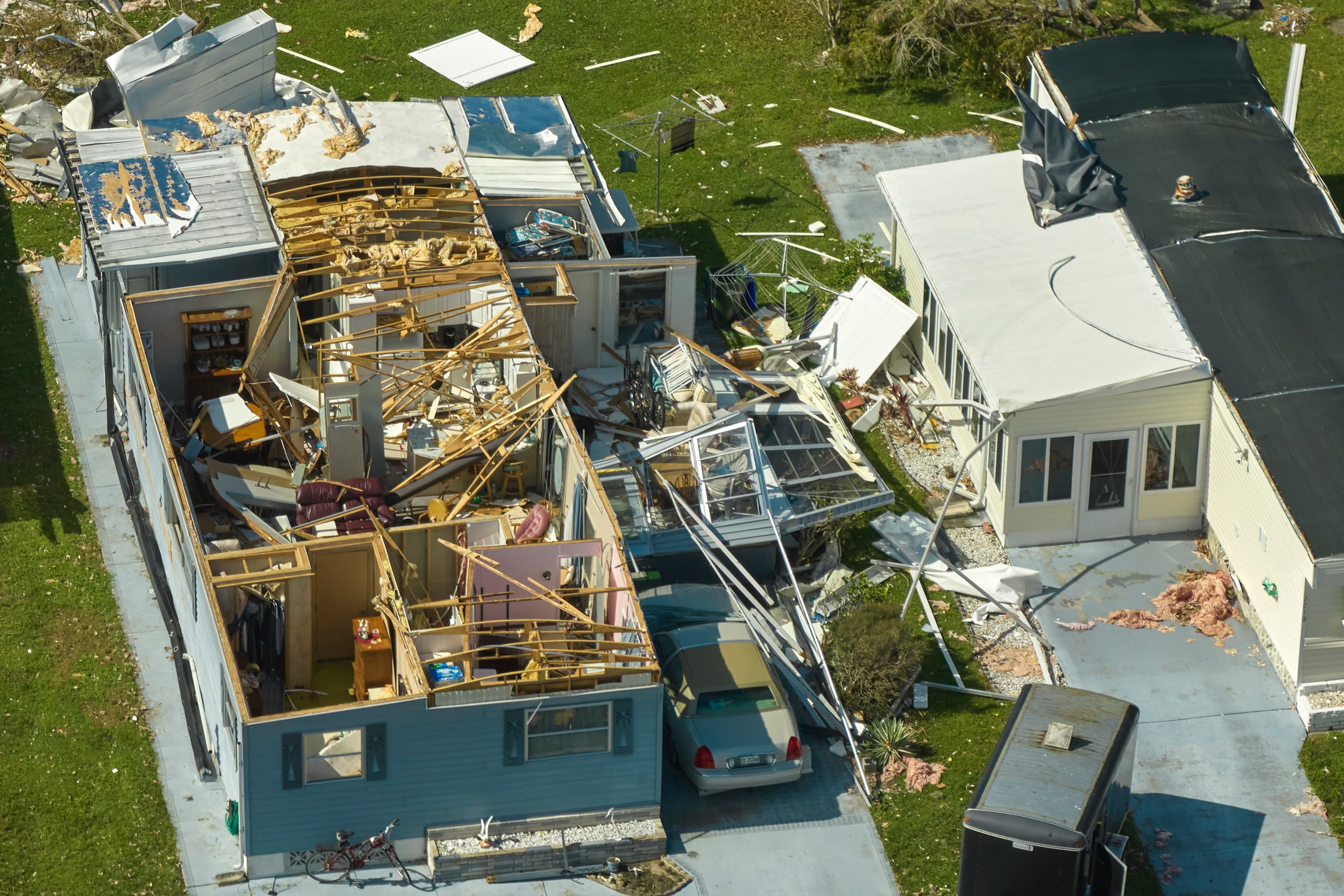
How Should Florida Businesses Prepare for Hurricane Season Disaster Recovery?
Florida businesses should prepare for hurricane season by reviewing their insurance program against hurricane-specific exposures at least 60 days before June 1, updating their business continuity plan with hurricane scenarios, establishing backup operations procedures, and verifying that their coverage includes windstorm, flood, and civil authority provisions.
Hurricane season runs June 1 through November 30. Most insurance carriers restrict policy changes and new coverage placements 30–60 days before and during active storm threats. Review your disaster recovery insurance program no later than April to ensure adequate windstorm and flood coverage, appropriate business interruption limits, and current property valuations. Waiting until a storm is in the forecast means you cannot make changes.
Florida-specific hurricane recovery considerations include:
- Named storm deductibles — most Florida commercial property policies carry separate, higher deductibles (often 2–5% of insured value) for named storm damage
- Flood coverage gaps — standard property policies exclude flood; you need a separate flood policy with adequate limits and BI coverage
- Extended recovery timelines — after a major hurricane, contractor availability, permit backlogs, and supply chain disruptions can extend recovery from months to over a year
- Civil authority coverage — mandatory evacuation orders can force closure even when your property is undamaged
- Utility restoration delays — power and water may take weeks to restore in heavily affected areas
Your risk management strategy should account for the reality that Florida hurricanes don't just damage individual businesses — they disrupt entire regions, making recovery resources scarce and timelines unpredictable.
How Do You Create a Disaster Recovery Plan That Aligns With Your Insurance?
You create an insurance-aligned disaster recovery plan by documenting your critical business functions, estimating recovery costs and timelines for each, mapping those estimates to your current insurance coverages, and closing any gaps before a disaster tests your plan.
Identify Critical Business Functions and Dependencies
List every function essential to your operations — production, sales, fulfillment, IT, finance, customer service. For each, identify the people, equipment, technology, facilities, and suppliers required. Rank functions by urgency: which must be restored within hours, days, or weeks?
Estimate Recovery Time Objectives (RTOs) and Costs
For each critical function, determine how long you can be down before suffering serious harm (your RTO), the revenue impact per day of downtime, the cost of workarounds or temporary operations, and the timeline to fully restore normal operations.
Map Recovery Needs to Insurance Coverages
Compare your recovery cost estimates against your current BI limits, extra expense coverage, contingent BI, and civil authority provisions. Flag any gap where your insurance falls short of your recovery needs — these are the exposures that need to be closed.
Close Coverage Gaps With Your Broker
Share your BCP analysis with your insurance broker and request specific coverage adjustments: increased BI limits, longer restoration periods, higher extra expense sublimits, contingent BI for critical suppliers, and extended period of indemnity for revenue ramp-up.
Document Backup Operations Procedures
For each critical function, document your backup plan: alternate facilities, remote work capabilities, backup equipment sources, emergency vendor contacts, and manual workaround procedures. These documented procedures ensure your team can execute without guessing.
Establish a Communication Protocol
Define how you'll communicate with employees, customers, suppliers, and insurers during a disaster. Include contact trees, notification templates, and alternate communication channels (since your primary systems may be down).
Test the Plan With Realistic Scenarios
Conduct tabletop exercises at least annually, simulating scenarios relevant to your location and industry. Include your insurance broker in at least one exercise per year to validate that your coverage responds to the scenarios you're planning for.
How Do You Test and Maintain Your Disaster Recovery Plan?
You test your disaster recovery plan by conducting tabletop exercises that simulate realistic disaster scenarios, walking through each step of your response and recovery procedures, identifying gaps and failures, and updating the plan based on what you learn. A plan that hasn't been tested is a plan that won't work.
Effective testing includes:
- Annual tabletop exercises with all key personnel participating
- Scenario variety — rotate between different disaster types (hurricane, fire, cyberattack, supply chain failure)
- Insurance validation — include your broker to verify coverage responses in real time during the exercise
- Documentation audit — verify that contact lists, vendor agreements, and backup procedures are current
- After-action review — document every gap discovered and assign owners and deadlines for fixes
Beyond annual exercises, update your plan whenever your business changes significantly: new locations, major equipment purchases, key personnel changes, new suppliers, or significant revenue growth. Each change can alter your recovery needs and insurance requirements.
What's the Complete Business Continuity Planning Checklist?
Build a Recovery Plan Your Insurance Actually Supports
Disaster recovery planning without insurance alignment is hope without a safety net. When you match your continuity plan to your coverage — and verify the match through regular testing — you transform disaster recovery from an uncertain scramble into a funded, rehearsed process.
SMAART Insurance helps Florida businesses build comprehensive insurance programs that integrate directly with their continuity plans. We'll review your BCP, identify coverage gaps, and structure policies that fund every phase of your recovery.
Sources & References
- [1]FEMA — Business Disaster Recovery Statistics, 2025
- [2]Allianz — Risk Barometer: Business Interruption Trends, 2025
- [3]Insurance Information Institute — Business Continuity and Insurance Integration Guide, 2025
- [4]Florida Division of Emergency Management — Hurricane Preparedness for Businesses, 2025
- [5]Institute for Business and Home Safety — Commercial Property Resilience Report, 2024
SMAART Insurance Editorial Team
Reviewed and published by SMAART Insurance — a licensed Florida insurance agency since 2018, headquartered in Fort Lauderdale. Our editorial team includes licensed insurance agents, certified risk managers, and financial professionals. 4.9★ on Google with 651 reviews.
Related Articles
Florida Insurance Rates Are Finally Falling in 2026: How to Actually Capture the Savings
Workers' comp is down 6.9%, commercial property premiums are falling, and Citizens is cutting personal-lines rates. Here is what turned in Florida's insurance market and how to capture it at renewal.
Wind Mitigation Inspections in Florida: How Documented Protection Lowers Business Property Premiums
A wind mitigation inspection documents the building features that lower the wind portion of Florida property premiums. See what carriers reward and what the updated 2026 state form checks before peak hurricane season.
Business Risk Assessment Checklist: Complete Guide
Use this business risk assessment checklist to identify exposures, score risks, and build an action plan that reduces claims and lowers insurance premiums.