Commercial Property Insurance in Florida: Navigating Hurricanes, Floods, and Coverage Gaps
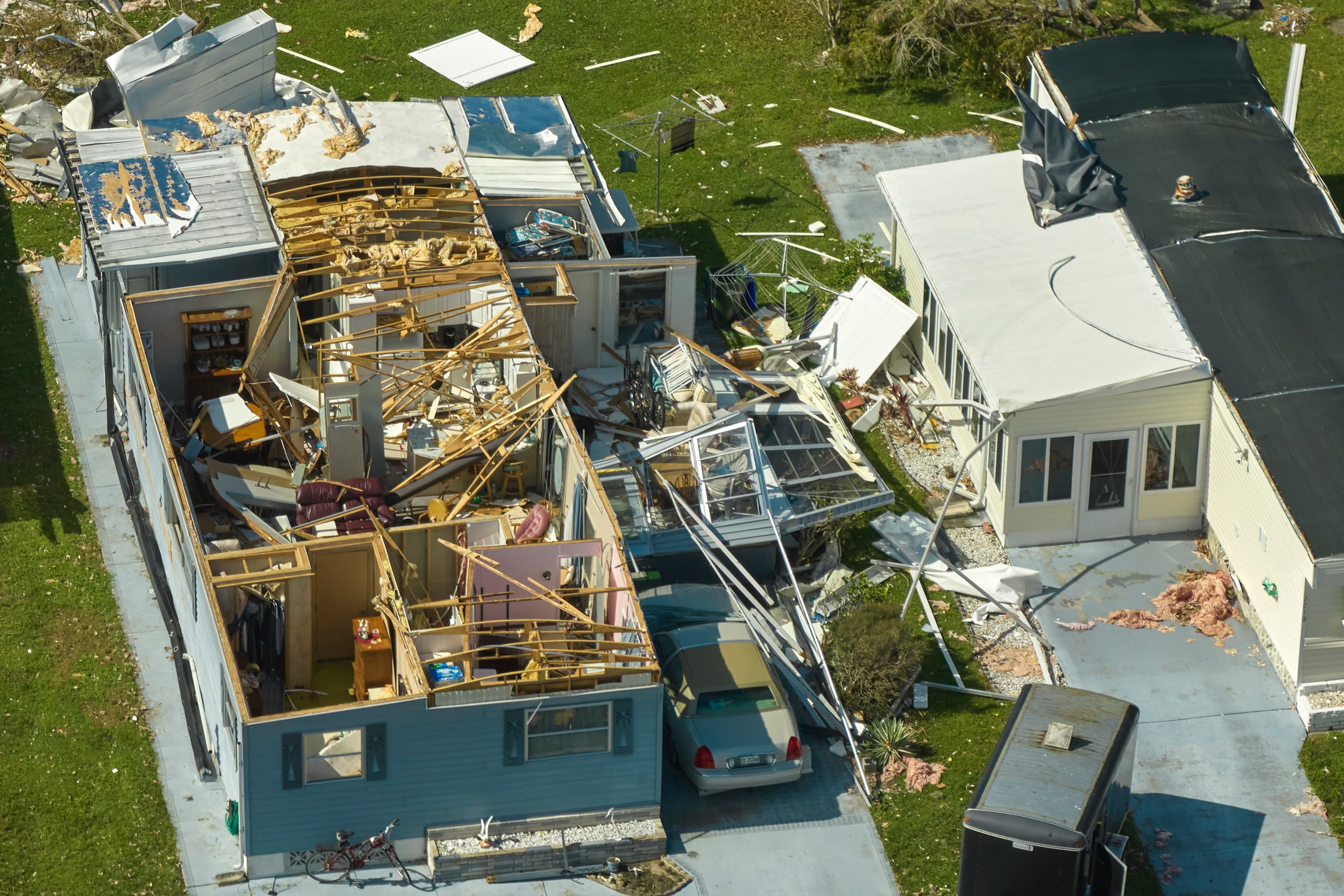
Owning commercial property in Florida means facing insurance challenges that property owners in other states simply do not encounter. Commercial property insurance in Florida is shaped by hurricane exposure, flood zone designations, carrier availability constraints, and construction costs that have risen dramatically in recent years. According to the Insurance Information Institute (III), Florida accounts for nearly 9% of all commercial property insurance claims nationwide but generates a disproportionate share of catastrophic losses.
Whether you own a retail plaza in Miami, a warehouse in Jacksonville, or an office building in Tampa, understanding what your policy covers — and what it explicitly excludes — is essential to protecting your investment. This guide breaks down the unique challenges of insuring commercial property in Florida and shows you exactly how to close the gaps that catch property owners off guard.
What Does Commercial Property Insurance Cover in Florida?
Commercial property insurance in Florida covers damage to your building structure, business personal property, and loss of rental or business income caused by covered perils like fire, wind, theft, and vandalism. However, flood damage and certain wind-related perils are typically excluded or require separate coverage.
A standard commercial property policy protects the physical structure of your building and its contents against a defined list of perils. In Florida, most policies are written on a "special form" (also called "all-risk") basis, which covers all perils except those specifically excluded. This is broader than a "named perils" policy, but the exclusions are where Florida property owners run into trouble.
| Covered Perils (Standard Policy) | Excluded Perils (Requires Separate Coverage) |
|---|---|
| Fire and lightning | Flood (storm surge, rising water, rain accumulation) |
| Wind and hail (subject to separate deductible) | Earthquake and earth movement |
| Theft and vandalism | Sewer and drain backup (endorsement available) |
| Smoke damage | Mold (limited or excluded) |
| Explosion | Government-ordered demolition |
| Aircraft or vehicle impact | War, terrorism (TRIA available) |
| Riot and civil commotion | Wear and tear, gradual deterioration |
| Business interruption from covered peril | Business interruption from flood (separate policy) |
The critical takeaway for Florida property owners: wind and flood are separate exposures that require separate coverage decisions, separate deductibles, and often separate policies. A hurricane can cause both wind damage (covered under your property policy) and flood damage (not covered unless you have a separate flood policy). This distinction is where the largest coverage gaps occur.
Why Is Flood Excluded From Standard Commercial Property Policies?
Flood is excluded from standard commercial property policies because flood risk is concentrated in specific geographic areas, making it uninsurable at standard rates through the private market. In Florida, you need a separate National Flood Insurance Program (NFIP) policy or a private flood insurance policy to cover flood losses.
This is the most critical gap in Florida commercial property coverage. Standard commercial property policies explicitly exclude "flood" — defined as rising water from any source, including storm surge, overflowing bodies of water, mudflow, and surface water accumulation. During a hurricane, the wind damage to your roof is covered by your property policy, but the four feet of storm surge in your ground-floor retail space is not.
Even if your commercial property policy includes "windstorm" or "hurricane" coverage, it does not cover flooding. Storm surge, rising water, and rain accumulation on the ground are flood perils that require a separate NFIP or private flood policy. In Florida, where most major hurricane losses involve storm surge, this gap can mean the difference between recovery and total loss.
The NFIP offers commercial flood policies with maximum limits of $500,000 for building coverage and $500,000 for contents. For many commercial properties, these limits are inadequate. Private flood insurers — which have expanded significantly in Florida since 2019 — can offer higher limits, replacement cost coverage, and business interruption protection that the NFIP does not provide.
According to the Federal Emergency Management Agency (FEMA), nearly 40% of NFIP flood claims come from properties outside high-risk flood zones. If your property is in a moderate- or low-risk zone, do not assume you are safe from flooding. Evaluate private flood coverage as a supplement or alternative to the NFIP.
How Does Citizens Property Insurance Compare to the Private Market?
Citizens Property Insurance Corporation is Florida's insurer of last resort for properties that cannot obtain coverage in the private market. It provides basic coverage but typically offers narrower terms, lower limits, and less flexibility than private carriers. However, for properties in high-risk areas, Citizens may be the only available option.
After several years of carrier exits and premium increases, Citizens has grown to become one of the largest property insurers in Florida by policy count. This growth was not by design — Citizens was created to serve as a backstop, not a primary market. The Florida legislature has taken steps to depopulate Citizens by encouraging private carriers to re-enter the market, but progress has been uneven.
Key differences between Citizens and private market coverage:
- Premiums — Citizens rates are subject to legislative caps and may be lower than private market rates for high-risk properties, but surcharges can be assessed on all Florida policyholders if Citizens suffers large losses
- Coverage terms — Citizens policies tend to have more restrictive terms, higher deductibles, and fewer endorsement options than private carriers
- Wind mitigation credits — Both Citizens and private carriers offer credits for wind-resistant construction features, but the magnitude of credits varies
- Claims handling — Private carriers generally offer faster claims resolution, while Citizens has faced backlogs during major storm seasons
If your property is currently insured through Citizens, review private market alternatives annually. As new carriers enter or re-enter the Florida market, you may find better terms, broader coverage, and competitive pricing in the private market.
How Can You Reduce Commercial Property Insurance Premiums in Florida?
You can reduce premiums by investing in wind mitigation features, maintaining updated property valuations, increasing your wind/hurricane deductible strategically, bundling coverages, and working with a broker who has access to both admitted and surplus lines markets.
Florida property insurance premiums have risen sharply in recent years, but there are concrete steps you can take to control costs without sacrificing essential coverage.
Wind Mitigation Credits — Florida law requires insurers to offer discounts for properties with wind-resistant construction features. A certified wind mitigation inspection documents features like roof shape, roof deck attachment, roof-to-wall connections, opening protection (shutters or impact glass), and secondary water resistance barriers. These credits can dramatically reduce your premium.
Accurate Valuations — While underinsuring your property reduces premiums, it creates a catastrophic gap at claim time. Instead, ensure your building valuation is accurate — not inflated by your carrier to increase premiums, and not deflated to save money. An independent replacement cost appraisal gives you leverage to negotiate fair valuations.
Deductible Strategy — Florida commercial property policies typically have a separate hurricane or wind deductible expressed as a percentage of the building value (commonly 2%, 3%, or 5%). Increasing this deductible from 2% to 5% can reduce your annual premium significantly, but make sure you can absorb the higher out-of-pocket cost in a loss.
Market Access — Work with a broker who has access to both admitted carriers and the Florida surplus lines market. The surplus lines market (also called E&S) often provides coverage for properties that admitted carriers decline, and pricing can be competitive when multiple surplus lines carriers compete for your business.
What Should Florida Property Owners Know About Valuation Gaps?
Many Florida commercial properties are insured at values 20-40% below their actual replacement cost, creating a dangerous gap that only becomes apparent at claim time. Rising construction costs, material shortages, and updated building codes mean your replacement cost today may be far higher than when you purchased or last reviewed your policy.
Replacement cost is not the same as market value or purchase price. It is the cost to rebuild your property from the ground up at today's labor and material prices, incorporating current building codes. After a major hurricane, construction demand surges and costs increase further — meaning your rebuild cost may be even higher than pre-storm estimates.
The coinsurance clause in most commercial property policies penalizes you for underinsuring. If your policy requires 80% coinsurance and you insure your building at only 60% of replacement cost, the insurer will reduce your claim payment proportionally — even for partial losses. This penalty can turn a manageable loss into a financial disaster.
Work with your broker to obtain an independent replacement cost appraisal every two to three years. This is a modest investment that protects you from both underinsurance penalties and overpayment on premiums.
Protect Your Florida Commercial Property With the Right Coverage
Commercial property insurance in Florida requires more attention, more expertise, and more customization than in almost any other state. The combination of hurricane exposure, flood risk, carrier market volatility, and rising construction costs means that a "set it and forget it" approach to property coverage is a recipe for uncovered losses.
Review your policy annually with a broker who specializes in Florida commercial property. Verify your valuations, confirm your flood coverage, maximize your wind mitigation credits, and ensure your deductible structure matches your financial capacity. The time you invest in getting your coverage right will pay for itself the first time a storm makes landfall.
For more guidance on protecting Florida real estate investments, explore our articles on landlord liability insurance, disaster recovery planning, and Florida homeowners insurance.
Sources & References
- [1]Insurance Information Institute (III) — Commercial Property Insurance Facts and Statistics, 2025
- [2]National Oceanic and Atmospheric Administration (NOAA) — Billion-Dollar Weather and Climate Disasters, 2024
- [3]Federal Emergency Management Agency (FEMA) — National Flood Insurance Program Statistics, 2025
- [4]Citizens Property Insurance Corporation — Annual Report and Policy Count Data, 2025
- [5]Marshall & Swift/Boeckh — Commercial Property Valuation Trends, 2024
- [6]Florida Office of Insurance Regulation (OIR) — Market Stability Report, 2025
- [7]Florida Statute 627.0629 — Wind Mitigation Discount Requirements
SMAART Insurance Editorial Team
Reviewed and published by SMAART Insurance — a licensed Florida insurance agency since 2018, headquartered in Fort Lauderdale. Our editorial team includes licensed insurance agents, certified risk managers, and financial professionals. 4.9★ on Google with 651 reviews.
Related Articles
Condo Association Insurance Florida: HB 913 & 2026 Rules
Condo association insurance Florida costs are reshaped by HB 913, SIRS mandates, and full reserve funding in 2026. What every board must do now.
Landlord Liability Insurance Florida Guide
Landlord liability insurance in Florida protects rental property owners from tenant injury claims, lawsuits, and legal defense costs. Learn what coverage you need.