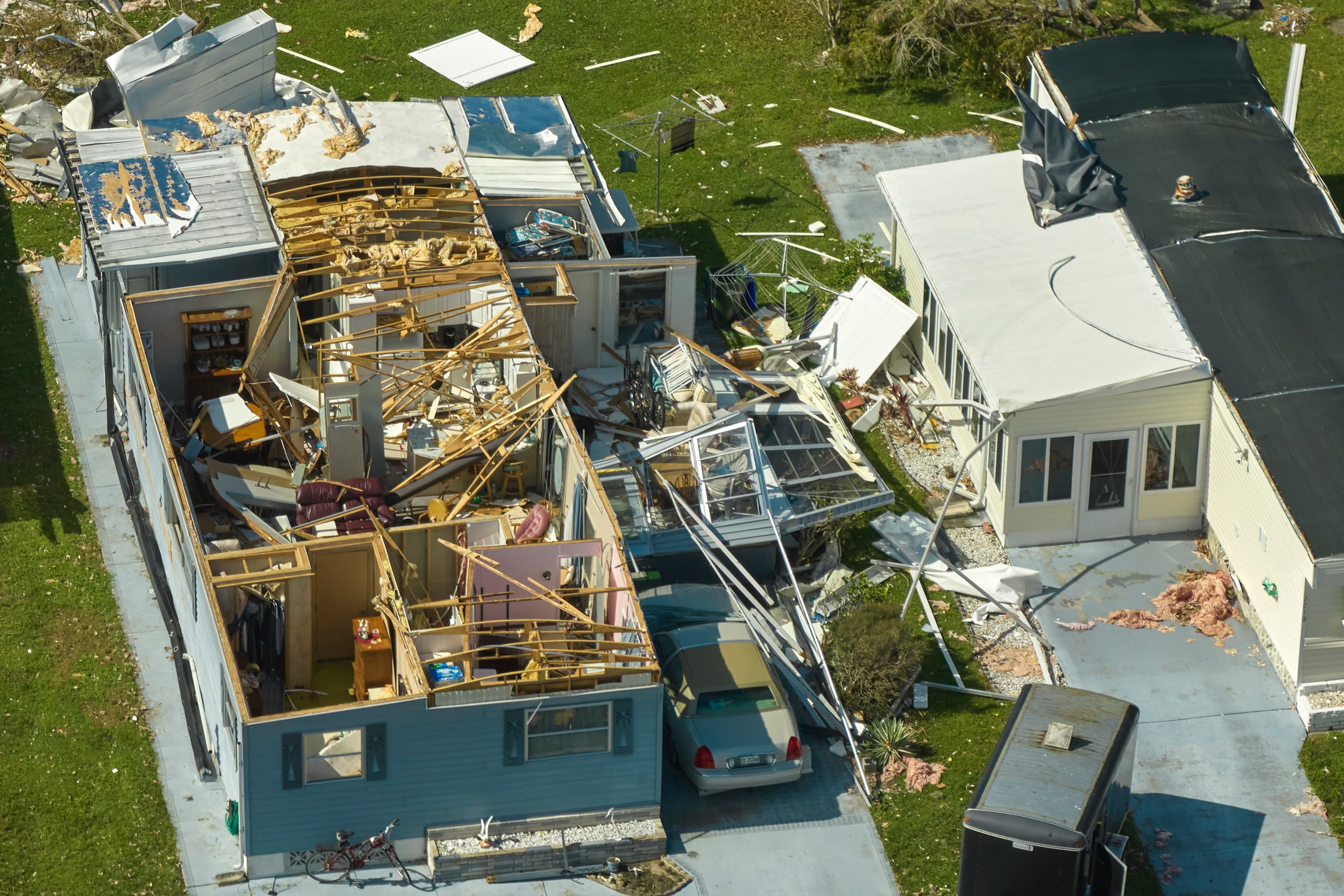
Why Is the Florida Homeowners Insurance Guide Essential for Every Homeowner?
A Florida homeowners insurance guide is essential because no state in the country has a more challenging homeowners insurance market. Florida homeowners pay an average of $4,231 per year — nearly three times the national average of $1,544 — according to the Insurance Information Institute. Multiple carriers have exited the state, premiums keep climbing, and coverage gaps catch homeowners off guard every hurricane season.
If you own a home in Florida, understanding your policy is not optional. It is the difference between recovering from a disaster and facing financial ruin.
This guide breaks down what your policy covers, what it does not, how Citizens compares to private carriers, and specific steps to reduce your premiums without sacrificing protection.
What Does a Standard Florida Homeowners Policy Cover?
A standard Florida homeowners policy (HO-3) covers four main categories of protection. It is designed for owner-occupied single-family homes and provides broad coverage for the structure with named-peril coverage for personal property.
| Coverage Section | What It Protects | Typical Limit |
|---|---|---|
| Dwelling (Coverage A) | Your home's structure — walls, roof, foundation, built-in appliances | Replacement cost of the home |
| Other Structures (Coverage B) | Detached garage, fence, shed, pool enclosure | 10% of dwelling coverage |
| Personal Property (Coverage C) | Furniture, electronics, clothing, personal items | 50-70% of dwelling coverage |
| Loss of Use (Coverage D) | Living expenses if your home is uninhabitable | 20% of dwelling coverage |
| Personal Liability (Coverage E) | Lawsuits from injuries on your property | $100K – $300K standard |
| Medical Payments (Coverage F) | Minor injury costs for guests, regardless of fault | $1K – $5K standard |
This is solid foundational coverage. But in Florida, what your policy excludes is just as important as what it includes.
What Does Florida Homeowners Insurance NOT Cover?
Florida's biggest coverage gaps catch homeowners by surprise after a major storm. Understanding these exclusions before disaster strikes gives you time to fill the gaps.
Key Exclusions in Most Florida Policies
- Flood damage: Requires a separate NFIP or private flood policy
- Sinkhole damage: Requires a separate sinkhole endorsement (catastrophic ground cover collapse may be included)
- Mold remediation: Limited to $10,000 or excluded entirely in many policies
- Windstorm in high-risk coastal zones: May be excluded, requiring a separate windstorm policy through Citizens
- Wear and tear: Gradual deterioration and maintenance failures are never covered
- Vacant home damage: Most policies exclude or limit coverage if the home is vacant for 60+ days
The single most important action you can take is to purchase a separate flood policy. In Florida, it is not a question of if flooding will affect your area — it is when.
How Does Citizens Insurance Compare to Private Carriers in Florida?
Citizens Property Insurance Corporation is Florida's state-backed insurer of last resort. It was created for homeowners who cannot find coverage in the private market. Understanding when Citizens makes sense — and when private coverage is better — is a critical part of any Florida homeowners insurance guide.
| Factor | Citizens Insurance | Private Carriers |
|---|---|---|
| Eligibility | Must show you cannot find comparable private coverage or private quote is 20%+ higher | Open to all qualifying homeowners |
| Premium Cost | Often lower than private market, but rising | Varies widely — sometimes lower than Citizens for low-risk homes |
| Coverage Limits | Capped at $700K for dwelling coverage | No statutory cap — can insure high-value homes |
| Hurricane Deductible | Typically 2% of dwelling value | Ranges from 2% to 10% depending on carrier and location |
| Claims Service | Slower processing, limited adjuster capacity after major storms | Varies by carrier — top-rated carriers process faster |
| Surplus Assessments | All Florida policyholders can be assessed if Citizens runs a deficit | No assessment risk for non-policyholders |
| Policy Options | Limited endorsements and customization | Full range of endorsements and riders available |
Florida law now requires Citizens policyholders to accept "take-out" offers from private carriers if the private premium is within 20 percent of the Citizens premium. This depopulation program has moved hundreds of thousands of policies back to the private market since 2023.
How Do Hurricane Deductibles Work in Florida?
Hurricane deductibles are one of the most misunderstood aspects of Florida homeowners insurance. Unlike standard deductibles (a flat dollar amount like $1,000), hurricane deductibles are calculated as a percentage of your dwelling coverage.
Here is what that means in real dollars. If your home is insured for $400,000 with a 2 percent hurricane deductible, you pay the first $8,000 out of pocket on any hurricane claim. At 5 percent, that is $20,000. At 10 percent, you are covering $40,000 before insurance kicks in.
| Dwelling Coverage | 2% Deductible | 5% Deductible | 10% Deductible |
|---|---|---|---|
| $300,000 | $6,000 | $15,000 | $30,000 |
| $400,000 | $8,000 | $20,000 | $40,000 |
| $500,000 | $10,000 | $25,000 | $50,000 |
| $750,000 | $15,000 | $37,500 | $75,000 |
The hurricane deductible applies once per hurricane season in most policies, not per storm. If two hurricanes hit in the same season, you pay the deductible only once. Confirm this with your carrier, as some policies apply the deductible per named storm.
How Can You Lower Your Florida Homeowners Insurance Premium?
Premiums are high, but you are not powerless. These strategies have helped our clients save 10 to 35 percent on their annual premiums without reducing essential coverage.
The single biggest premium saver in Florida is a roof upgrade. If your roof is more than 15 years old, replacing it with a modern, code-compliant roof can cut your premium by 20 percent or more. Some carriers will not even insure homes with roofs older than 20 years.
Wind mitigation inspections deserve special attention. A certified inspector evaluates your roof shape, roof deck attachment, roof-to-wall connections, opening protection (shutters or impact windows), and secondary water resistance. Each feature that meets current building code earns a discount. Homeowners with full wind mitigation credits can save 30 to 45 percent on their wind premium.
The Florida My Safe Home program offers grants of up to $10,000 to help homeowners in certain areas make wind-hardening improvements. Check with the Florida Division of Emergency Management to see if you qualify. The combination of grant funding and premium savings can make a roof upgrade essentially free over a five-year period.
What Should Every Florida Homeowner Review Before Hurricane Season?
Hurricane season runs from June 1 through November 30. Reviewing your coverage before it starts gives you time to make changes. Most carriers will not bind new policies or increase limits once a named storm enters the Gulf.
Do not wait until May to start this review. Carriers restrict changes as hurricane season approaches, and flood insurance policies have a 30-day waiting period before coverage takes effect. Start your review in March or April to give yourself time to make changes, shop alternatives, and bind new coverage before the restrictions begin.
How Can SMAART Insurance Help You Navigate Florida's Market?
Florida's homeowners insurance market rewards homeowners who work with experienced independent agents. At SMAART Insurance, we access both admitted carriers and surplus lines markets to find coverage options that captive agents cannot offer.
Our team specializes in South Florida homeowners coverage, including Miami-Dade, Broward, and Palm Beach counties — some of the most challenging markets in the state. We help you understand your policy, identify gaps, and structure coverage that holds up when you need it most.
Whether you are comparing Citizens vs private carriers, reviewing your hurricane deductible, or looking for ways to reduce your premium, we are here to help. Schedule a free policy review and get a quote today.
The Florida homeowners insurance market is not getting simpler. Climate risk, litigation costs, and carrier instability continue to challenge homeowners across the state. But with the right advisor, the right coverage structure, and proactive mitigation efforts, you can protect your home and your family without overpaying.
Do not wait until a claim or a storm reveals gaps in your coverage. Review your policy today, confirm your flood insurance is in place, and make sure your dwelling coverage reflects what it would actually cost to rebuild your home at today's construction prices. These three steps alone put you ahead of most Florida homeowners.
For umbrella coverage that extends your homeowners liability protection, or to review your auto insurance alongside your homeowners policy for maximum bundling discounts, our team handles it all under one roof.
Sources & References
- [1]Insurance Information Institute — Homeowners Insurance Affordability Report, 2025
- [2]FEMA — National Flood Insurance Program Claims and Policy Data, 2024
- [3]Florida Office of Insurance Regulation — Citizens Property Insurance Annual Report, 2025
- [4]Florida Office of Insurance Regulation — Residential Property Market Stability Report, 2025
- [5]National Association of Insurance Commissioners — Homeowners Insurance Market Share Data, 2025
- [6]Florida Building Commission — Wind Mitigation Inspection Standards, 2024
- [7]Insurance Institute for Business & Home Safety — Fortified Home Standards, 2024
SMAART Insurance Editorial Team
Reviewed and published by SMAART Insurance — a licensed Florida insurance agency since 2018, headquartered in Fort Lauderdale. Our editorial team includes licensed insurance agents, certified risk managers, and financial professionals. 4.9★ on Google with 651 reviews.
Related Articles
Hurricane Deductibles Explained: What Florida Homeowners Actually Pay After a Storm
Florida's hurricane deductible can mean $10,000+ out of pocket after a storm. Learn how percentage deductibles work and how to prepare before landfall.
Flood Insurance Florida: 2026 Costs, New Rules & Coverage
Flood insurance Florida costs, the new 2026 Citizens flood requirement, and NFIP vs. private options — what every Florida homeowner needs to know now.
Pool & Backyard Liability for Florida Homeowners: A National Water Safety Month Guide
May is National Water Safety Month. Florida leads the nation in residential pool drownings — and the liability exposure that follows. Here is how homeowners should structure coverage.