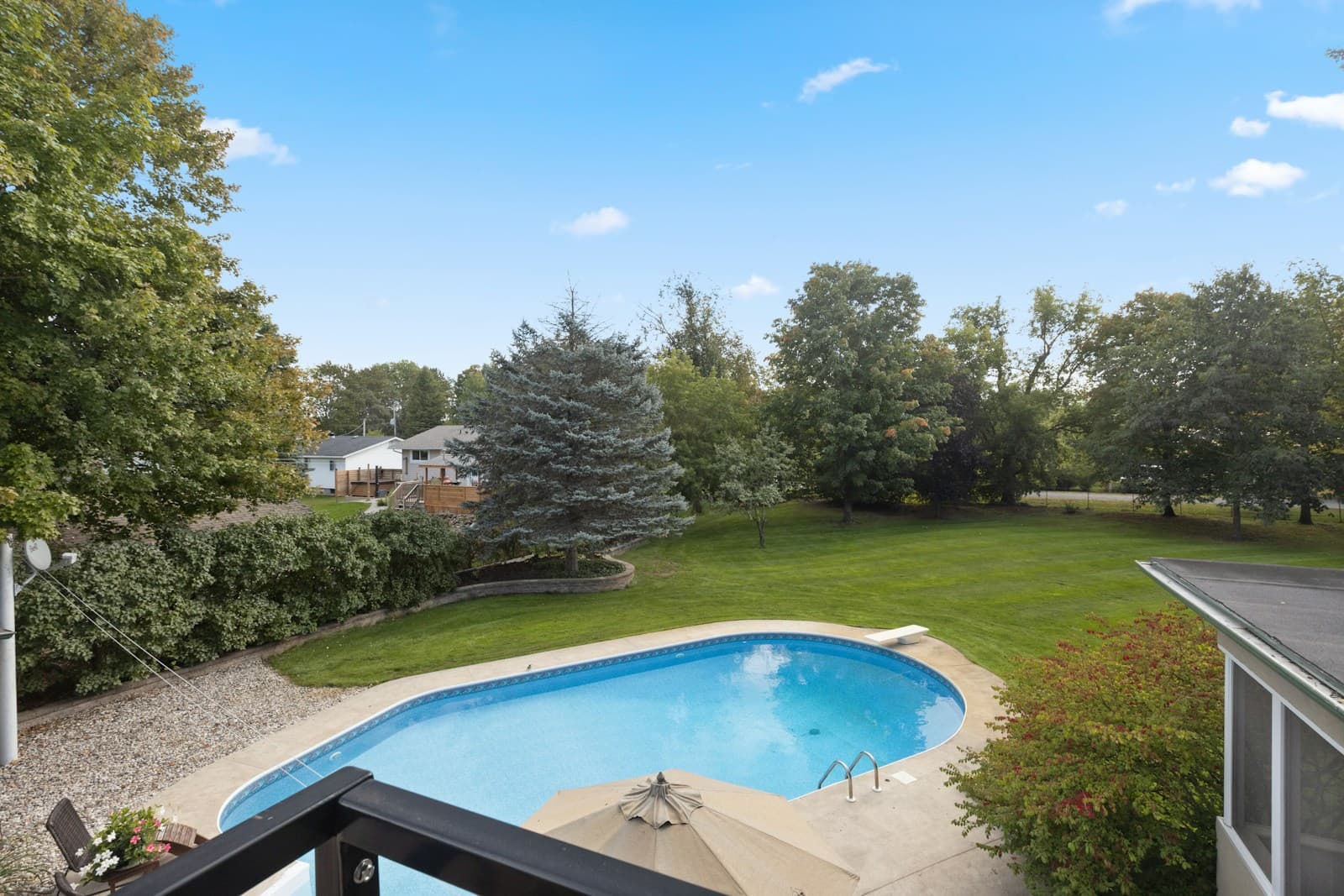
Pool & Backyard Liability for Florida Homeowners: A National Water Safety Month Guide
May is National Water Safety Month — and in Florida, no homeowner topic is more time-sensitive. With more than 1.3 million residential swimming pools statewide and year-round outdoor weather, Florida leads the nation in residential drownings, near-drownings, and pool-related liability claims. As temperatures climb and pool use peaks heading into summer, your homeowners coverage either protects you or quietly fails to.
Most Florida homeowners do not realize that a single pool incident on their property can produce a seven-figure liability claim. Standard homeowners policies cap liability at $100,000 to $300,000 — far below the cost of a serious injury, brain injury, or wrongful death claim. This guide walks you through exactly how pool liability works in Florida, what your homeowners policy covers, where the gaps are, and how to structure coverage that holds up when the worst-case happens.
Why Pool Liability Is a Defining Risk for Florida Homeowners
Florida's combination of year-round outdoor weather, dense residential pool installations, and large entertaining culture creates one of the highest pool-related liability profiles in the country. The numbers are stark.
The Centers for Disease Control and Prevention reports that drowning is the leading cause of unintentional death for children ages one through four nationally. In Florida, the rate is dramatically higher — driven by the volume of residential pools, year-round access, and the speed at which a child can enter unsupervised water.
For Florida homeowners, the legal and financial exposure extends well beyond family use. Anyone you invite onto your property — guests, contractors, neighbors, even children who wander into the yard without invitation — creates potential liability. And under Florida's "attractive nuisance" doctrine, certain features like pools carry heightened legal responsibility even when the person on the property had no permission to be there.
What Is Florida's Attractive Nuisance Doctrine and How Does It Affect You?
Florida courts recognize what is called the "attractive nuisance" doctrine — a legal principle that holds property owners to a higher duty of care when their property contains features that are likely to attract children and pose a risk of serious injury or death. Swimming pools are the textbook example.
Under this doctrine, a Florida homeowner can be held liable for injuries to a trespassing child if:
- The property contains a feature that creates a foreseeable risk of harm
- The feature is likely to attract children who cannot appreciate the risk
- The cost of eliminating or preventing access is small compared to the risk
- The owner failed to take reasonable steps to prevent access
In practice, this means a Florida homeowner with an unfenced or improperly secured pool can be held liable when a neighbor's child wanders onto the property and is injured — even without permission, supervision, or any active invitation.
Florida Pool Safety Act Requirements
Florida's Residential Swimming Pool Safety Act (Florida Statute 515) requires every residential pool built after October 1, 2000 to include at least one of the following safety features:
- A pool barrier (typically a four-foot fence) meeting specific construction standards
- An approved pool safety cover
- An alarm on every door and window providing direct access from the home to the pool area
- Self-closing, self-latching devices on all doors providing direct pool access
Failing to maintain these features is not just a code violation — it can be used as evidence of negligence in a liability claim.
What Does Standard Homeowners Insurance Cover for Pool Incidents?
Your homeowners policy provides two layers of protection for pool-related incidents — but both layers come with limits that may not match modern claim severity.
Personal Liability Coverage
Personal liability under a standard homeowners policy pays for bodily injury and property damage you cause to others. It covers legal defense costs, settlements, and judgments. Standard limits range from $100,000 to $300,000, though many Florida homeowners carry $500,000.
The problem is that pool incidents — particularly drowning, near-drowning, and brain injury claims — routinely produce settlements and verdicts well into seven figures. A typical pool drowning claim against a Florida homeowner involves:
- Wrongful death damages (lost earnings, pain and suffering, loss of consortium)
- Medical and rehabilitation costs (for near-drowning survivors)
- Funeral and burial expenses
- Punitive damages (in cases of gross negligence)
A $300,000 policy limit absorbs a fraction of a typical settlement. The balance comes from the homeowner's personal assets.
Medical Payments to Others
Med pay coverage on a homeowners policy pays medical costs for guests injured on your property regardless of fault. Limits typically range from $1,000 to $5,000 per person. This coverage helps absorb minor injuries before they escalate into liability claims but does not meaningfully address serious pool incidents.
| Coverage Layer | Typical Limit | What It Covers | Where It Falls Short |
|---|---|---|---|
| Personal Liability | $100K – $500K | Bodily injury and property damage claims | Limits well below typical pool injury settlements |
| Medical Payments | $1K – $5K per person | Guest medical costs regardless of fault | Sub-limits absorb only minor incidents |
| Personal Umbrella | $1M – $10M+ | Liability above primary HO limits | Requires separate purchase — many Florida homeowners do not have one |
| Pool-Specific Exclusions | Varies | Diving boards, slides, pool service contractors | Some carriers exclude or surcharge based on pool features |
Pool-Specific Underwriting Restrictions
Many Florida homeowners carriers impose pool-specific underwriting requirements:
- Required four-foot fencing with self-closing, self-latching gates
- Prohibition on diving boards, slides, and certain pool features
- Required pool covers or alarms in specific circumstances
- Surcharges for pools without compliant barriers
Confirm your policy does not exclude pool liability coverage and that you meet all underwriting requirements.
Why Every Florida Pool Owner Should Carry an Umbrella Policy
A personal umbrella policy provides liability coverage above and beyond your homeowners and auto policy limits. For Florida pool owners, an umbrella is not optional — it is the only practical structure for absorbing modern pool liability claims.
How Umbrella Coverage Works for Pool Claims
An umbrella policy "sits on top of" your underlying homeowners liability. If a covered claim exceeds your homeowners liability limit, the umbrella pays the balance — up to the umbrella's own limit. For a Florida homeowner with a $300,000 homeowners liability limit and a $2 million umbrella, total available coverage on a pool claim is $2.3 million.
Most personal umbrella policies are surprisingly affordable — $200 to $500 annually for $1 million of coverage, $400 to $900 for $2 million. Florida pool owners often pay a modest surcharge given the underlying exposure, but the cost-to-coverage ratio remains favorable.
Umbrella Underwriting Requirements
Most umbrella carriers require:
- Minimum underlying homeowners liability limits (typically $300,000 or $500,000)
- Minimum underlying auto liability limits (typically $250,000/$500,000)
- Disclosure of pool, trampoline, dog breeds, and other heightened exposures
- Compliance with applicable Florida Pool Safety Act requirements
What Should Florida Pool Owners Do This Water Safety Month?
Use this checklist to address every layer of pool liability — insurance, safety equipment, supervision, and documentation. Complete this before pool season hits peak intensity.
What Should You Do If an Incident Happens at Your Pool?
How you respond to a pool incident affects both the medical outcome for the injured party and the trajectory of any resulting liability claim. The protocol below applies to any pool injury — from a minor slip to a near-drowning.
Initiate Emergency Response Immediately
Call 911 first. Begin CPR if needed. The first three to five minutes of response time materially affect drowning and near-drowning outcomes. Designate a single person to remain with the victim until EMS arrives.
Secure the Scene Without Disturbing Evidence
Once emergency response is underway, do not move pool equipment, alter safety features, or remove items from the area. Photograph the scene as it was at the time of the incident.
Identify Witnesses and Document Their Accounts
Get full names and contact information for every witness. Ask each to write a brief account of what they observed while the memory is fresh.
Notify Your Insurance Broker Within 24 Hours
Early notification protects coverage and starts the claim process. Provide a factual summary of the incident — do not speculate about cause or fault.
Do Not Discuss Liability With the Injured Party or Family
Express care and concern. Offer to help with immediate needs. But do not admit fault, accept responsibility, or discuss insurance coverage. Florida liability claims involve nuanced analysis best handled by your broker and carrier.
Preserve All Documentation
Save photographs, witness accounts, safety feature records, and any communications related to the incident. Your broker and carrier will need a complete documentation trail.
Frequently Asked Questions
Does my homeowners policy automatically cover my pool?
Most standard homeowners policies cover pool-related liability, but coverage is subject to your overall liability limit and any pool-specific exclusions or underwriting restrictions. Confirm your policy includes pool liability and that you meet all underwriting requirements (fencing, alarms, prohibited features).
What is the difference between an in-ground and an above-ground pool from an insurance standpoint?
In-ground pools generally carry higher underwriting scrutiny, higher surcharges, and stricter safety feature requirements. Above-ground pools may be subject to fewer requirements depending on size and access. Both create meaningful liability exposure — neither is exempt from attractive nuisance considerations.
Do I need a separate insurance policy for my pool?
No. Pool liability is typically covered under your homeowners policy. The right structure for most Florida pool owners is adequate homeowners liability limits ($500,000 minimum) plus a personal umbrella policy ($2 million minimum).
Does Florida require a fence around my pool?
Yes — for pools built after October 1, 2000. Florida Statute 515 requires at least one approved safety feature: a compliant barrier (typically a four-foot fence), a safety cover, door and window alarms, or self-closing self-latching pool-access devices. Older pools are not legally required to meet these standards but courts may still consider modern safety standards in liability cases.
Will my insurance cover injuries to a trespasser who used my pool without permission?
In many cases, yes — particularly involving children under Florida's attractive nuisance doctrine. The law holds property owners to a heightened duty of care when their property contains features likely to attract children. This is exactly why Florida pool owners need robust liability coverage and proper safety features.
Protect Your Pool, Your Guests, and Your Family
Pool ownership in Florida is a quality-of-life decision. But it is also a liability decision. The right combination of safety features, insurance limits, and documented compliance does not eliminate risk — but it materially shifts the financial outcome when something goes wrong.
Start with a complete review of your homeowners liability and umbrella coverage. Confirm your safety features meet or exceed Florida Pool Safety Act requirements. Document everything. Then enforce clear rules with every guest who uses your pool.
At SMAART Insurance, we help Florida homeowners across Miami, Fort Lauderdale, West Palm Beach, and all of South Florida build personal insurance programs that reflect the real cost of pool ownership. From homeowners and umbrella to high-value home coverage, we structure protection that holds up under Florida verdict conditions. Get your free pool liability review today or learn more about our personal insurance services.
For broader Florida homeowners context, see our Florida Homeowners Insurance Guide, our deep dive on umbrella policies, and our analysis of high-value home coverage in Florida.
Sources & References
- [1]Florida Department of Children and Families — Florida Drowning Prevention Report, 2025
- [2]Centers for Disease Control and Prevention (CDC) — Unintentional Drowning: Get the Facts, 2025
- [3]Florida Legislature — Florida Statute 515: Residential Swimming Pool Safety Act, 2025
- [4]Insurance Information Institute — Pool Liability and Homeowners Insurance, 2025
- [5]Florida Justice Reform Institute — 2024 Verdict Survey, 2025
- [6]American Society for Testing and Materials (ASTM) — F1346 Standard for Pool Safety Covers, 2024
- [7]National Drowning Prevention Alliance — Residential Pool Safety Standards, 2025
SMAART Insurance Team
Reviewed and published by SMAART Insurance — a licensed Florida insurance agency since 2018, headquartered in Fort Lauderdale. Our editorial team includes licensed insurance agents, certified risk managers, and financial professionals. 4.9★ on Google with 651 reviews.
Related Articles
Hurricane Deductibles Explained: What Florida Homeowners Actually Pay After a Storm
Florida's hurricane deductible can mean $10,000+ out of pocket after a storm. Learn how percentage deductibles work and how to prepare before landfall.
Flood Insurance Florida: 2026 Costs, New Rules & Coverage
Flood insurance Florida costs, the new 2026 Citizens flood requirement, and NFIP vs. private options — what every Florida homeowner needs to know now.