Business Interruption Insurance Coverage for Florida Businesses: Surviving the Days After a Hurricane
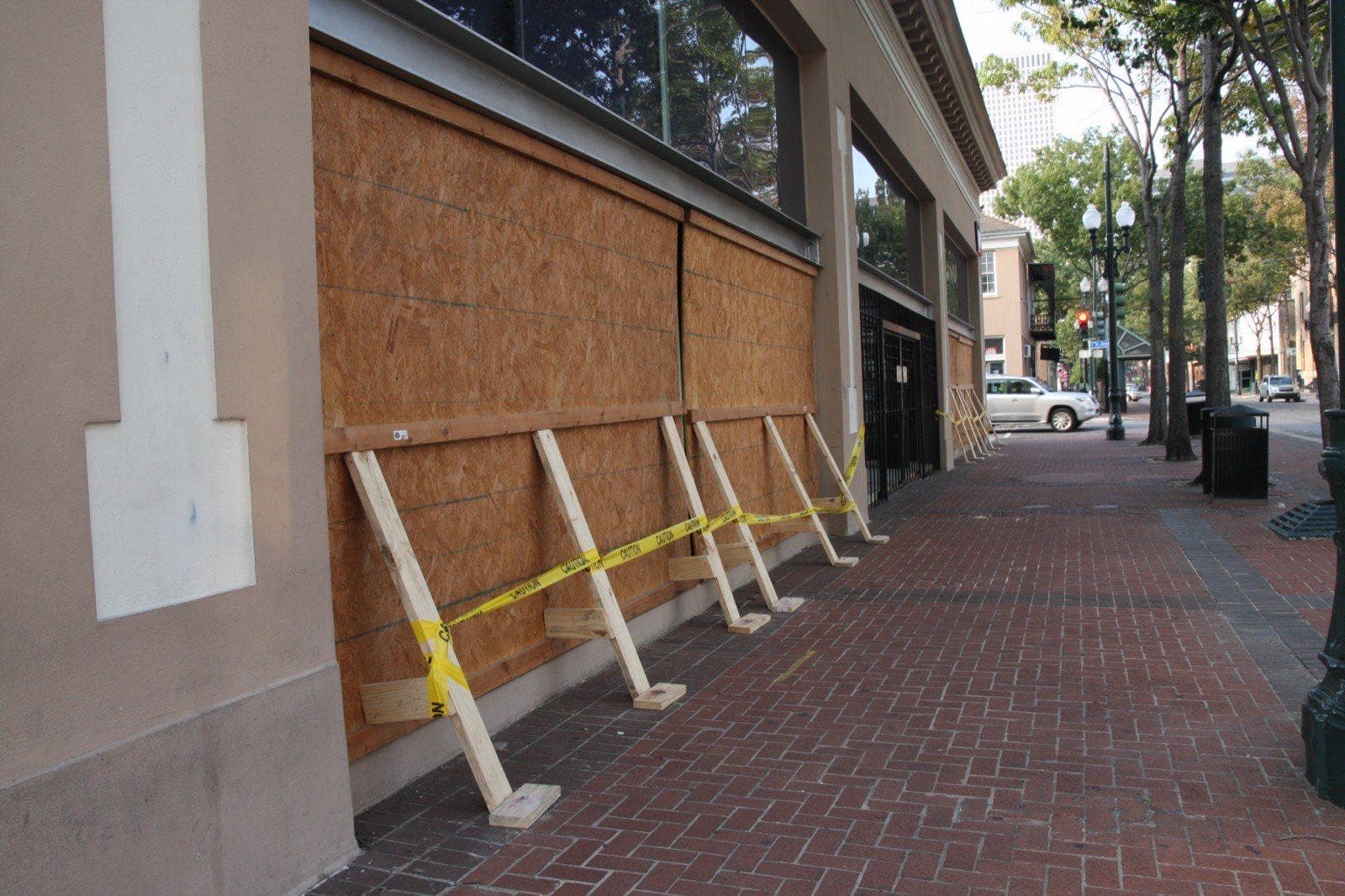
Picture the week after a hurricane moves through South Florida. Your building took damage, your doors are closed, and your revenue has stopped — but payroll, rent, loan payments, and vendor invoices have not. This is the exact gap business interruption insurance exists to fill, and it is the coverage Florida small and mid-sized businesses most consistently get wrong.
Property insurance rebuilds your building. Business interruption insurance — also called business income coverage — replaces the money your business would have earned while it could not operate. For a Florida SMB heading into peak hurricane season, the difference between the two is often the difference between reopening and never reopening at all.
This guide walks you through how business interruption coverage is triggered, what it pays, how waiting periods and restoration periods actually work, the Florida-specific traps — named storm deductibles, the flood gap, and binding moratoriums — and how to set limits that reflect what your business really earns. July is the right month to do this work: the heart of hurricane season arrives in August, and once a named storm is on the map, your options close fast.
What Is Business Interruption Insurance — and What Triggers It?
Business interruption insurance replaces the income your business loses when a covered event forces you to suspend operations. It is not sold as a standalone policy — it attaches to your commercial property insurance or your business owners policy (BOP) as a coverage part or endorsement.
That structure matters, because the trigger is not "my business lost money." The standard trigger has two parts: there must be direct physical loss or damage to property at your insured location, and that damage must be caused by a peril your underlying property policy covers. Wind tears off your roof and you close for six weeks — covered, because windstorm is a covered peril on most Florida commercial property forms. Storm surge floods your showroom — likely not covered, because flood is excluded from standard commercial property policies.
The same logic applies to indirect losses. A slow season, a canceled contract, or customers who simply stopped coming after a storm do not trigger the coverage on their own. If you are unsure how your policy defines its covered perils, that question belongs in a coverage review — not in a claim dispute after the storm. Our commercial insurance guide covers how the underlying property forms fit together.
What Does Business Interruption Insurance Cover and Pay For?
When the coverage is triggered, business interruption insurance is designed to put your business in roughly the financial position it would have occupied if the loss had never happened. That means it pays more than just lost profit.
| What It Pays | Why It Matters After a Hurricane |
|---|---|
| Lost net income | The profit you would have earned during the shutdown, based on your financial records and projections |
| Payroll | Keeps your team paid so they do not leave for other jobs while you rebuild |
| Rent or lease payments | Your landlord expects payment whether you are open or not |
| Loan payments and taxes | Fixed obligations continue through the closure |
| Temporary relocation costs | Rent, setup, and moving expenses for an interim location |
| Extra expense | Costs above normal operating expenses that reduce the length or severity of the shutdown |
Extra expense coverage deserves its own mention. It reimburses spending that goes beyond your normal operating costs when that spending shortens the interruption — expedited equipment shipping, generator rental, overtime for a rush repair crew, or the premium you pay for temporary space in a tight post-storm rental market. For service businesses that can work from anywhere, extra expense coverage is sometimes more valuable than the income coverage itself.
How Do the Waiting Period and Restoration Period Work?
Business interruption coverage does not start paying the moment the storm passes. Most policies apply a time-based waiting period — commonly 48 to 72 hours — before income coverage begins. If your shutdown lasts two days, you may recover nothing at all. That is by design: the coverage targets sustained interruptions, not brief closures.
Once coverage begins, it runs through the period of restoration — the time reasonably required to repair, rebuild, or replace the damaged property with due diligence. The restoration period typically ends when the property should be repaired, not when your revenue recovers, and many policies cap it at 12 months. After a major Florida hurricane, when contractors, materials, and permits are all backlogged at once, real-world rebuild timelines can strain that cap.
There is one more piece worth asking your broker about: extended business income. Reopening your doors does not mean your customers return on day one. An extended period of indemnity continues income coverage for a defined stretch after restoration — often 30 to 60 days by default, extendable by endorsement — while your revenue climbs back to pre-loss levels.
Why Do Contingent, Civil Authority, and Utility Coverages Matter in Florida?
A hurricane does not have to hit your building to shut down your business. Three extensions address the ways Florida businesses lose income without direct damage of their own.
Contingent Business Interruption
Contingent coverage responds when physical damage at someone else's property interrupts your operations — a key supplier whose plant flooded, a distributor that cannot ship, or an anchor customer that stopped ordering because its own facility is closed. For Florida businesses tied to a small number of suppliers or one dominant customer, this is a real exposure that standard business income coverage does not touch.
Civil Authority Coverage
Civil authority coverage applies when a government order — not damage to your property — prohibits access to your business. Mandatory evacuation orders, post-storm curfews, and closed access roads are the classic Florida scenarios. The fine print matters: the order generally must result from physical damage to property near yours caused by a covered peril, coverage usually starts after a short waiting period, and it is commonly limited to a few weeks. It is valuable, but it is narrow — do not assume an evacuation order alone opens the coverage.
Utility Service Interruption
Standard policies typically exclude income losses caused by off-premises power failure. After a hurricane, that is precisely how many South Florida businesses lose their week: the building is fine, but the grid is down. A utility service interruption endorsement can buy back that exposure — though many versions exclude damage to overhead transmission lines, which is exactly how hurricane outages usually happen. Read this endorsement carefully with your broker, and price a generator as the operational backstop.
How Does Hurricane Season Change the Math for Your Coverage?
Two Florida-specific realities reshape how business interruption coverage performs after a named storm: the hurricane deductible on your property policy, and the flood exclusion underneath it.
First, deductibles. Florida commercial property policies typically carry a separate named storm or hurricane deductible expressed as a percentage of insured value — commonly two, five, or 10 percent — rather than a flat dollar amount. On a $2 million building, a five percent deductible means the first $100,000 of wind damage is yours. Your business income coverage has its own time-based waiting period, but that property deductible drains the same cash reserves you need to survive the early weeks of a shutdown. The two provisions compound each other, and your recovery plan has to account for both.
Second, the flood gap. Standard commercial property policies exclude flood and storm surge — and because business interruption coverage follows the underlying policy, income lost to flood damage is excluded too. The federal National Flood Insurance Program (NFIP) does not fix this: NFIP commercial policies cover physical flood damage to the building and contents, but they do not include business interruption coverage at all. If storm surge closes your business, an NFIP policy pays to repair the property and nothing for the months of income you lost. Closing that gap requires private flood coverage or a difference-in-conditions (DIC) policy with a business income extension.
A serious risk assessment maps these exposures against your actual location, elevation, and cash position — before the season tests them for you.
How Do You Set Business Interruption Insurance Limits?
Most business interruption underinsurance traces back to one skipped step: the business income worksheet. Carriers provide these worksheets for a reason — the limit should be built from your actual financials and a forward 12-month projection, not from a round number that felt reasonable at renewal.
Gather Your Financials
Pull the last two years of profit and loss statements, tax returns, and monthly revenue records. Seasonal businesses should keep the monthly detail — an annual average hides your peak-season exposure.
Project the Next 12 Months
Business income coverage looks forward, not backward. Project the coming year's revenue, continuing expenses, and payroll, including growth you expect and contracts already signed.
Estimate Your Realistic Downtime
Model how long a major wind or flood event would actually close your business — including post-hurricane permitting delays, contractor shortages, and equipment lead times, not a best-case repair schedule.
Set the Limit and Review It Annually
Match your limit and restoration period to the projection, confirm any coinsurance requirement is satisfied, and revisit the worksheet every renewal as revenue changes.
Why do Florida SMBs underbuy this coverage? The patterns repeat. Owners underestimate downtime, assuming weeks when post-hurricane rebuilds run months. They treat the coverage as optional because it is invisible — you cannot photograph lost income the way you can a damaged roof. Growing businesses outgrow limits set two renewals ago. And some policies carry coinsurance provisions that quietly penalize any business whose reported income values fall short of the required percentage, cutting the claim payment exactly when it matters most.
Where the coverage lives also matters. Many BOPs include business income on an actual loss sustained basis for 12 months, while standalone commercial property programs let you tailor limits, restoration periods, and endorsements. Our BOP vs standalone comparison walks through which structure fits which business.
Why Should You Review Your Coverage in July — Not When a Storm Is Named?
The Atlantic hurricane season runs June 1 through November 30, but the season's core arrives in August. Roughly 80 percent of Atlantic tropical storm and hurricane activity historically occurs from August through October, with the climatological peak in early September. NOAA publishes its seasonal outlook each spring, and Florida businesses do not need a specific forecast to know what the calendar says: the highest-risk stretch of the year is weeks away.
Here is the mechanism that makes July the deadline rather than a suggestion. When a named storm forms and threatens Florida, carriers impose binding moratoriums — temporary suspensions on new policies, coverage increases, and reduced deductibles until the threat passes. Once a storm is "in the box," you generally cannot buy business interruption coverage, raise your limits, add a civil authority or utility endorsement, or bind a private flood policy. Whatever program you have when the moratorium hits is the program you ride the storm out with.
Flood coverage adds its own clock. A new NFIP policy carries a standard 30-day waiting period before it takes effect, and private flood placements need underwriting time. Count backward from mid-August and the math is unambiguous: the review has to happen now.
What Should Your Business Do Before Peak Season?
Use this checklist with your broker in the next two weeks — while every option is still on the table.
The businesses that survive a Florida hurricane are rarely the ones that guessed right about the weather. They are the ones that treated business interruption insurance as a cash flow lifeline, sized it with a worksheet, and closed the flood and civil authority gaps before the first advisory was issued.
At SMAART Insurance, we help small and mid-sized businesses across Miami, Fort Lauderdale, West Palm Beach, and all of South Florida build commercial insurance programs that hold up when the season turns. We review your business income limits, stress-test your waiting and restoration periods, and shop specialty markets for the flood and interruption coverage standard policies leave out. Get your free quote today or contact our team to schedule a pre-season coverage review — before the first named storm makes the decision for you.
Sources & References
- [1]FEMA — Protecting Your Business from Disaster, 2024
- [2]FEMA — National Flood Insurance Program Coverage Overview, 2025
- [3]NOAA National Hurricane Center — Tropical Cyclone Climatology, 2025
- [4]NOAA Climate Prediction Center — Atlantic Hurricane Season Outlook, 2026
- [5]Insurance Information Institute — Business Interruption Insurance Basics, 2025
- [6]Florida Office of Insurance Regulation — Hurricane Season Resources and Deductible Guidance, 2025
- [7]U.S. Small Business Administration — Disaster Preparedness and Recovery Guidance, 2025
SMAART Insurance Team
Reviewed and published by SMAART Insurance — a licensed Florida insurance agency since 2018, headquartered in Fort Lauderdale. Our editorial team includes licensed insurance agents, certified risk managers, and financial professionals. 4.9★ on Google with 651 reviews.
Related Articles
Workers' Comp Insurance Florida: 2026 Rates Drop 6.9%
Workers' comp insurance Florida rates drop 6.9% in 2026 — the ninth straight decrease. Learn what your business will pay and how to capture the savings.
Hurricane Season Final Countdown: Florida's Last Insurance Window Before June 1, 2026
Atlantic hurricane season begins June 1. Carriers are already restricting binding. Here is exactly what Florida businesses and homeowners must lock in before the window closes.