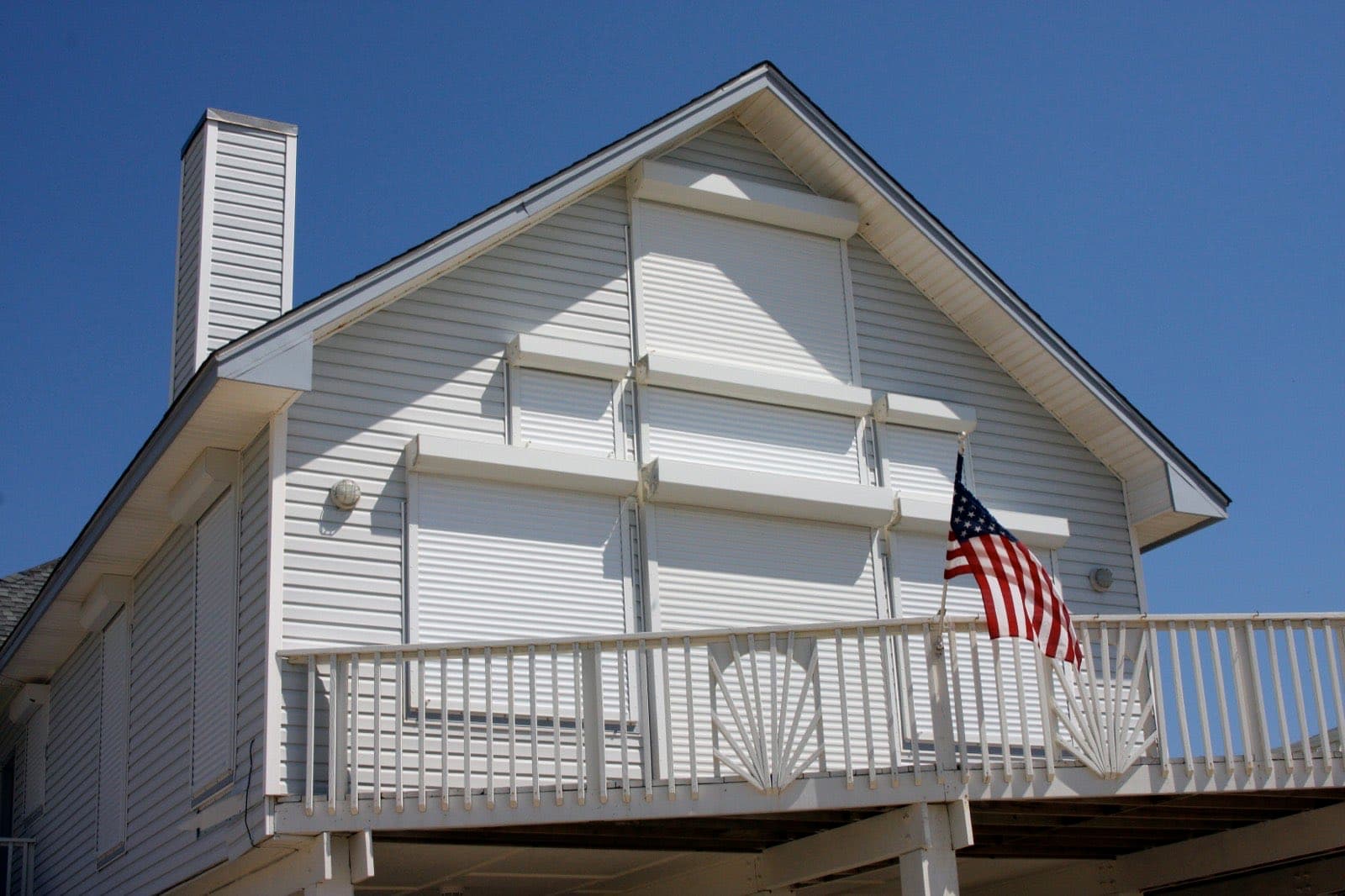
Wind Mitigation Inspections in Florida: How Documented Protection Lowers Business Property Premiums
If you own or lease commercial property in South Florida, wind is almost certainly the single largest driver of your property insurance premium. What most business owners do not realize is that wind mitigation in Florida is one of the few premium levers you directly control — the state's insurance framework is built to reward documented windstorm protection, and carriers price it in when you prove it. The catch is that none of it happens automatically. If your building's wind-resistant features are not inspected, documented, and submitted to your carrier, you are paying as if they do not exist.
The timing matters, too. It is late July. The statistical heart of the Atlantic hurricane season — August through October — is weeks away. Once a named storm approaches Florida, carriers suspend new business and policy changes through binding moratoriums, and inspectors' calendars fill fast.
This guide walks Florida business owners through how wind mitigation discounts work, the specific building features carriers reward, what an inspection involves for commercial versus residential property, and the ROI math that makes a July inspection one of the highest-return risk management moves you can make this year. If you have already read our hurricane season guide, consider this the companion playbook for turning preparation into premium savings.
What Is a Wind Mitigation Inspection, and Why Florida Law Rewards It
A wind mitigation inspection is a documented evaluation of the building features that reduce windstorm damage: how your roof is attached, what protects your openings, and whether water can get in if the roof covering fails. For residential property, Florida standardized this process with the Uniform Mitigation Verification Inspection Form, known as OIR-B1-1802, issued by the Florida Office of Insurance Regulation. A licensed inspector completes the form, and insurers apply credits based on the verified features.
One important 2026 change: as of April 1, 2026, inspectors must use the updated version of that form, OIR-B1-1802 (Rev. 04/26). Florida reevaluates the form every five years under Statute 627.0629, and this revision, informed by a 2024 residential wind-loss mitigation study, adds performance-based options for roof-to-wall attachment and reroofing. If your last inspection predates April 2026, a fresh inspection puts your documentation on the current state form and can capture credits the older version did not recognize.
The legal foundation is Florida Statute 627.0629. It requires residential property insurers to include, in their rate filings, actuarially reasonable discounts, credits, or rate differentials for construction techniques demonstrated to reduce windstorm losses — fixtures such as roof strength, roof-to-wall attachment, opening protection, and secondary water resistance. In plain terms: for residential risks, carriers are not merely permitted to reward mitigation, they are required to build those credits into their rates.
Commercial property works differently, and this is where many business owners get lost. There is no commercial version of the 1802 form, and Statute 627.0629 applies to residential rate filings. But commercial carriers absolutely price wind resistance — they do it through underwriting. Engineering reports, roof condition surveys, documentation of Florida Building Code compliance, and third-party certifications such as the IBHS FORTIFIED Commercial standard all feed directly into how underwriters rate your building's wind exposure. The mechanism is different; the outcome is the same. Documented mitigation lowers the price of wind risk.
The Seven Rating Features That Drive Wind Mitigation Credits in Florida
The OIR-B1-1802 form evaluates seven specific categories. Even though the form itself is residential, the same engineering logic drives commercial underwriting — so every Florida property owner should understand what carriers are looking at.
| Feature | What the Inspector Verifies | Why Carriers Care |
|---|---|---|
| Building code | Whether the structure was permitted under the 2001 Florida Building Code or later (or the 1994 South Florida Building Code in Miami-Dade and Broward) | Post-Andrew code buildings suffer materially less wind damage |
| Roof covering | Whether shingles, tile, metal, or membrane meet current code approvals, and when the roof was installed | The roof covering is the first thing a hurricane attacks |
| Roof deck attachment | Nail size and spacing fastening the deck to the trusses — 8d nails at close spacing earn stronger ratings | A poorly nailed deck peels off long before design wind speeds |
| Roof-to-wall connection | Toe nails, clips, single wraps, or double wraps — hurricane straps outperform clips, which outperform nails | This connection keeps the entire roof structure on the building |
| Roof geometry | Whether the roof shape is hip (sloping on all sides), gable, or other | Hip roofs shed wind loads better and consistently rate best |
| Secondary water resistance | A sealed roof deck or self-adhering underlayment beneath the covering | Keeps water out after the covering fails — the difference between roof repair and total interior loss |
| Opening protection | Impact-rated glass, code-approved shutters, and rated garage or bay doors on every opening | One breached opening pressurizes the building and can trigger structural failure |
Two of these deserve special attention from business owners. First, roof-to-wall connections: the difference between toe-nailed trusses and double-wrapped hurricane straps is one of the largest single credit drivers on the residential form, and commercial underwriters scrutinize the same connection detail in engineering reports. Second, opening protection: credits generally require protection on every exterior opening — windows, doors, skylights, and overhead doors. One unprotected loading dock door can forfeit the entire opening protection credit.
How Wind Mitigation Credits Lower Your Wind Premium
The honest answer: it depends on how much of your premium is wind. In coastal South Florida — Miami, Fort Lauderdale, and West Palm Beach — wind and hurricane exposure often represents the majority of a commercial property premium. That is exactly why mitigation credits are so powerful here: they discount the largest slice of the bill.
For residential and condo properties, Florida's My Safe Florida Home program has commonly cited combined mitigation credits reaching 40 percent or more of the wind portion of the premium when a full package of features is verified. Commercial savings are not published on a standard schedule — they emerge from underwriting — but well-documented mitigation routinely moves commercial wind pricing by a meaningful double-digit percentage, and in some cases determines whether a carrier will quote the risk at all in a tight market.
Think in proportions rather than a fixed number. On a coastal commercial building where wind makes up the majority of the property premium, a documented package of features (post-2002 code compliance, strapped roof-to-wall connections, a sealed roof deck, and full opening protection) can move wind pricing down by a meaningful percentage at renewal. Because a mitigation report and inspection stay usable for years, that credit is not a one-time win; it recurs at every renewal for as long as the features are documented and the building qualifies.
The same logic applies to retrofits. Upgrading to impact-rated doors and window protection is a capital investment, but it is offset by recurring wind-credit savings at every renewal, lower expected storm damage, less downtime, and stronger insurability in a market that is increasingly selective about coastal wind risk. For buildings you plan to hold long term, that combination often pays back faster than owners assume. Our risk assessment services team runs this analysis, building by building.
Why July Is the Deadline That Matters
The Atlantic hurricane season runs June 1 through November 30, but the activity is not evenly distributed. According to NOAA's hurricane climatology, the large majority of Atlantic hurricane activity — and nearly all of Florida's historical major hurricane strikes — occurs between August and October, with the statistical peak in early to mid September. Late July is the last comfortable window to act before that curve turns upward.
Three clocks are running at once. First, inspection and contractor capacity: wind mitigation inspectors, roofing contractors, and shutter installers book out quickly once the season's first serious storm makes headlines. Second, binding moratoriums: when a named storm enters the region — typically once a tropical storm or hurricane watch or warning is issued for Florida — carriers suspend binding new policies, increasing coverage, and processing changes until the storm passes. If you wait until a storm is on the map to submit your inspection or bind better terms, you will be locked out at the exact moment you want protection most.
Third, the renewal calendar. Credits and re-underwriting typically apply at renewal or policy change, not retroactively. Completing your inspection now means the documentation is in your carrier's file before your next renewal is priced — and if the numbers justify it, your broker has time to re-shop the account with proof of mitigation in hand.
How the Florida Building Code and State Programs Stack the Deck in Your Favor
Florida's entire mitigation framework traces back to Hurricane Andrew in 1992, which caused on the order of $25 billion in damage (in 1992 dollars) and exposed catastrophic weaknesses in construction practices across South Florida. The response reshaped the state: Miami-Dade and Broward adopted stringent high-velocity hurricane zone standards, and in 2002 Florida implemented a unified statewide Florida Building Code with some of the strongest wind provisions in the country. That is why the very first question on the 1802 form is the building's permit date — post-Andrew code buildings are simply better risks, and they are priced accordingly.
The state also puts money behind retrofits. The My Safe Florida Home program, administered by the Florida Department of Financial Services, offers eligible homeowners free wind mitigation inspections and matching grants of up to $10,000 toward qualifying retrofits such as opening protection and roof improvements. The Legislature also created a My Safe Florida Condominium pilot program extending the concept to eligible condominium associations. Both are residential programs — but they matter to business owners for two reasons.
First, if you are a business owner who also owns a home in Florida, the program is a direct opportunity to cut your personal wind premium with state help. Second, and more strategically: the engineering principles the state subsidizes for homes — stronger roof attachment, sealed decks, impact protection — are exactly the measures commercial underwriters reward. Your business cannot apply for the grant, but it can apply the playbook. For a broader look at protecting the asset itself, see our guide to commercial property insurance.
Wind Mitigation for Commercial Buildings: What Underwriters Want to See
Because there is no standard commercial form, documentation quality is everything. Commercial underwriters price what they can verify, and a well-assembled mitigation package can materially change how your building is rated. Here is what belongs in it.
Start with a current roof inspection or roof condition survey from a licensed engineer or qualified roofing professional — covering the covering type and age, deck attachment, and roof-to-wall connections. Add documentation of opening protection: impact-glass certifications, shutter product approvals, and rated overhead doors, covering every opening including loading docks. Document secondary water barriers if present, and gather your permit history proving the building — or its roof replacement — was completed under the 2002 or later Florida Building Code. If you want a gold standard to aim for, the Insurance Institute for Business & Home Safety publishes the FORTIFIED Commercial standard, a voluntary beyond-code certification that a growing number of carriers recognize in underwriting. The Federal Alliance for Safe Homes (FLASH) also publishes practical wind mitigation guidance for property owners.
Underwriters also reward operational readiness — a documented hurricane preparedness plan and a tested disaster recovery plan signal a well-managed risk, which influences terms beyond the wind rate itself. Our risk assessment checklist walks through the full documentation set.
How Do You Get Wind Mitigation Discounts Applied to Your Policy?
Documentation only saves money once it reaches the person pricing your risk. The process is straightforward, but each step has a failure point worth knowing about.
Schedule the Right Inspection
For residential property, hire a licensed inspector authorized to complete the OIR-B1-1802 form. For commercial buildings, engage a licensed engineer or qualified inspector to produce a wind mitigation engineering report covering the seven feature categories.
Fix the Cheap Gaps First
If the inspection reveals one or two low-cost gaps — an unrated garage door, a missing shutter panel, an undocumented sealed deck — remediate before submitting. A complete feature package often earns disproportionately more credit than a partial one.
Submit the Documentation to Your Carrier
Send the completed form or engineering report to your broker for submission. Confirm in writing that the carrier received it and applied the credits — do not assume submission equals application.
Verify the Premium Change
Ask for a revised declarations page or renewal quote showing the before-and-after. The credit should be visible in the wind or hurricane premium component, not buried in a rounding change.
Re-Shop at Renewal With Mitigation in Hand
Carriers weight mitigation differently. A documented package that earns a modest credit with your current carrier may earn a materially better rate — or better terms — elsewhere. Have your broker market the account with the report attached.
Calendar the Five-Year Renewal
Inspection forms expire after five years. Set a reminder to re-inspect before expiration, and re-document immediately after any roof replacement or major renovation, since improvements can increase your credits.
Your Pre-Season Action Plan
Peak season is weeks away, and every item below is achievable before it arrives. Treat this as your July working list.
Lock In the Discount Before the Season Locks You Out
Wind mitigation is the rare corner of Florida insurance where the property owner holds the leverage. The state requires residential credits by statute, commercial underwriters reward documented protection at every renewal, and the improvements themselves make it far more likely your business is open the week after a storm instead of the quarter after. The only losing move is leaving the features you already have undocumented — or waiting until a storm is on the map, when moratoriums freeze your options.
At SMAART Insurance, we help business and property owners across Miami, Fort Lauderdale, West Palm Beach, and all of South Florida turn wind mitigation into real premium savings — coordinating inspections, assembling underwriting documentation, and marketing your account to carriers that reward it. Explore our commercial insurance programs, get a free quote, or contact our team to schedule a mitigation-focused review of your property program before peak season arrives.
Sources & References
- [1]Florida Legislature — Section 627.0629, Florida Statutes (Residential Property Insurance; Rate Filings), 2025
- [2]Florida Legislature — Section 627.711, Florida Statutes (Notice of Premium Discounts; Uniform Mitigation Verification Inspection Form), 2025
- [3]Florida Office of Insurance Regulation — Uniform Mitigation Verification Inspection Form OIR-B1-1802, 2012
- [4]Florida Office of Insurance Regulation — Uniform Mitigation Verification Inspection Form OIR-B1-1802 (Rev. 04/26), effective April 1, 2026
- [5]Florida Administrative Register — Rule 69O-170.0155 revision incorporating OIR-B1-1802 (Rev. 04/26), effective April 1, 2026
- [6]Florida Department of Financial Services — My Safe Florida Home Program Overview, 2025
- [7]Florida Department of Financial Services — My Safe Florida Condominium Pilot Program, 2024
- [8]Florida Building Commission — Florida Building Code, 8th Edition, 2023
- [9]NOAA National Hurricane Center — Atlantic Hurricane Season Climatology, 2025
- [10]Insurance Institute for Business & Home Safety — FORTIFIED Commercial Standard, 2025
- [11]Federal Alliance for Safe Homes (FLASH) — Wind Mitigation and Hurricane Retrofit Guidance, 2025
SMAART Insurance Team
Reviewed and published by SMAART Insurance — a licensed Florida insurance agency since 2018, headquartered in Fort Lauderdale. Our editorial team includes licensed insurance agents, certified risk managers, and financial professionals. 4.9★ on Google with 651 reviews.
Related Articles
Florida Insurance Rates Are Finally Falling in 2026: How to Actually Capture the Savings
Workers' comp is down 6.9%, commercial property premiums are falling, and Citizens is cutting personal-lines rates. Here is what turned in Florida's insurance market and how to capture it at renewal.
Business Risk Assessment Checklist: Complete Guide
Use this business risk assessment checklist to identify exposures, score risks, and build an action plan that reduces claims and lowers insurance premiums.